
HVAC Acoustic Screens
Acoustic Screens for Industrial Plant HVAC Systems
Safetylyne designs, manufactures, and installs engineered acoustic screens for industrial environments.
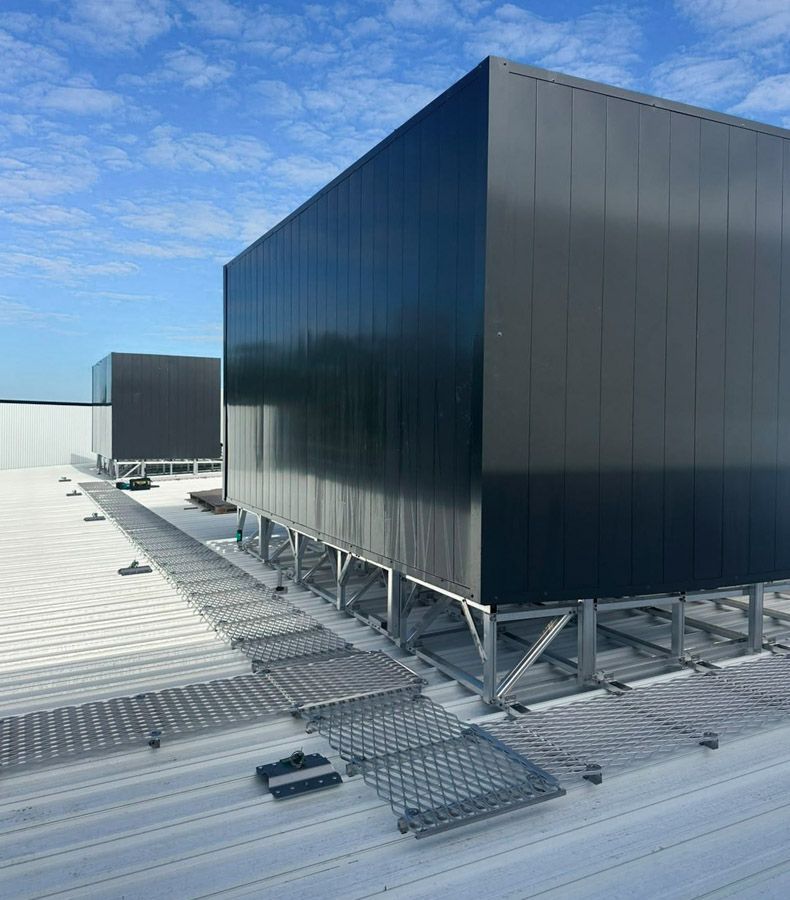
These acoustic barriers are purpose-built for external HVAC plants, cooling towers, chiller plants and roof mounted plant equipment. The acoustic screens reduce noise transmission, and contribute to aesthetic treatment around roof mounted plant areas, and provide a compliant maintenance access zone.
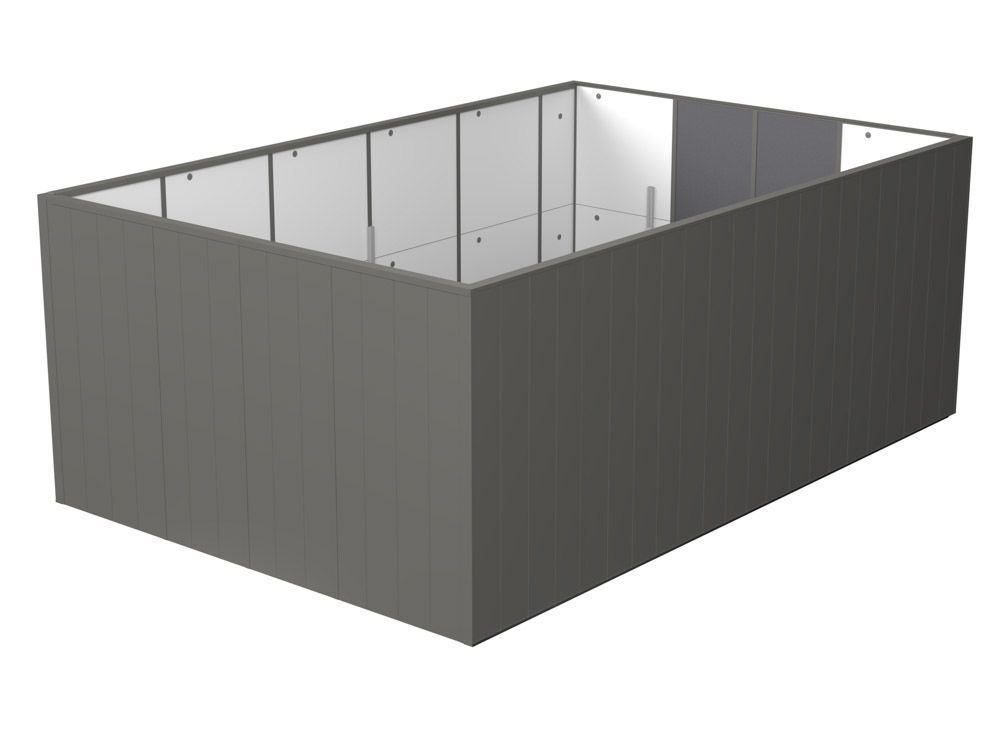
Acoustic Barriers for Commercial and Industrial Sites
Mechanical plant noise requires early design consideration, as rooftop HVAC and cooling plants operate continuously and can impact surrounding environments. Well-engineered acoustic control supports compliance and long-term building performance. Safetylyne designs and manufactures acoustic enclosures and screens for external HVAC systems, integrating noise attenuation with safe, compliant access.
An acoustic enclosure is a purpose-built structure designed to reduce sound transmission from mechanical plant equipment.
Acoustic screens play a crucial role in controlling mechanical plant noise on rooftops and external plant areas by:
- Reducing airborne noise
- Limit sound reflection and reverberation
- Shield surrounding properties from mechanical plant noise
- Assist with compliance with local council and environmental noise requirements
- Maintain ventilation and equipment performance
- Improve building aesthetics to conceal HVAC equipment
- Provide controlled authorised access to plant
- Assist with architectural colour coordination
- Use of hydrophobic materials minimising moisture retention
Safetylyne acoustic screens are engineered with consideration for structural loads and maintenance access requirements.
How Acoustic Screens Improve HVAC Noise Control
Noise from HVAC equipment travels in two main ways:
- Direct airborne transmission
- Reflected and amplified sound from nearby structures
and substrates
An engineered acoustic screen reduces noise by:
- Blocking direct line-of-sight sound paths
- Using absorptive internal linings to reduce reflected noise level
- Increasing transmission loss through mass-loaded panels
- Use of solid materials within screen details to provide a solid noise barrier.
What do you have to consider when choosing an acoustic screen for your plant:
Barrier height, panel thickness, absorptive material selection, distance from neighbours and roof edges, equipment noise transmission levels, spacing from the plant, and acceptable ambient noise levels are all critical factors - and they interact with each other on every site.
A poorly designed screen can hurt building aesthetics, reduce acoustic performance, or even increase turbulence and vibration. Engineered screens account for imposed structural loads and wind load impact.
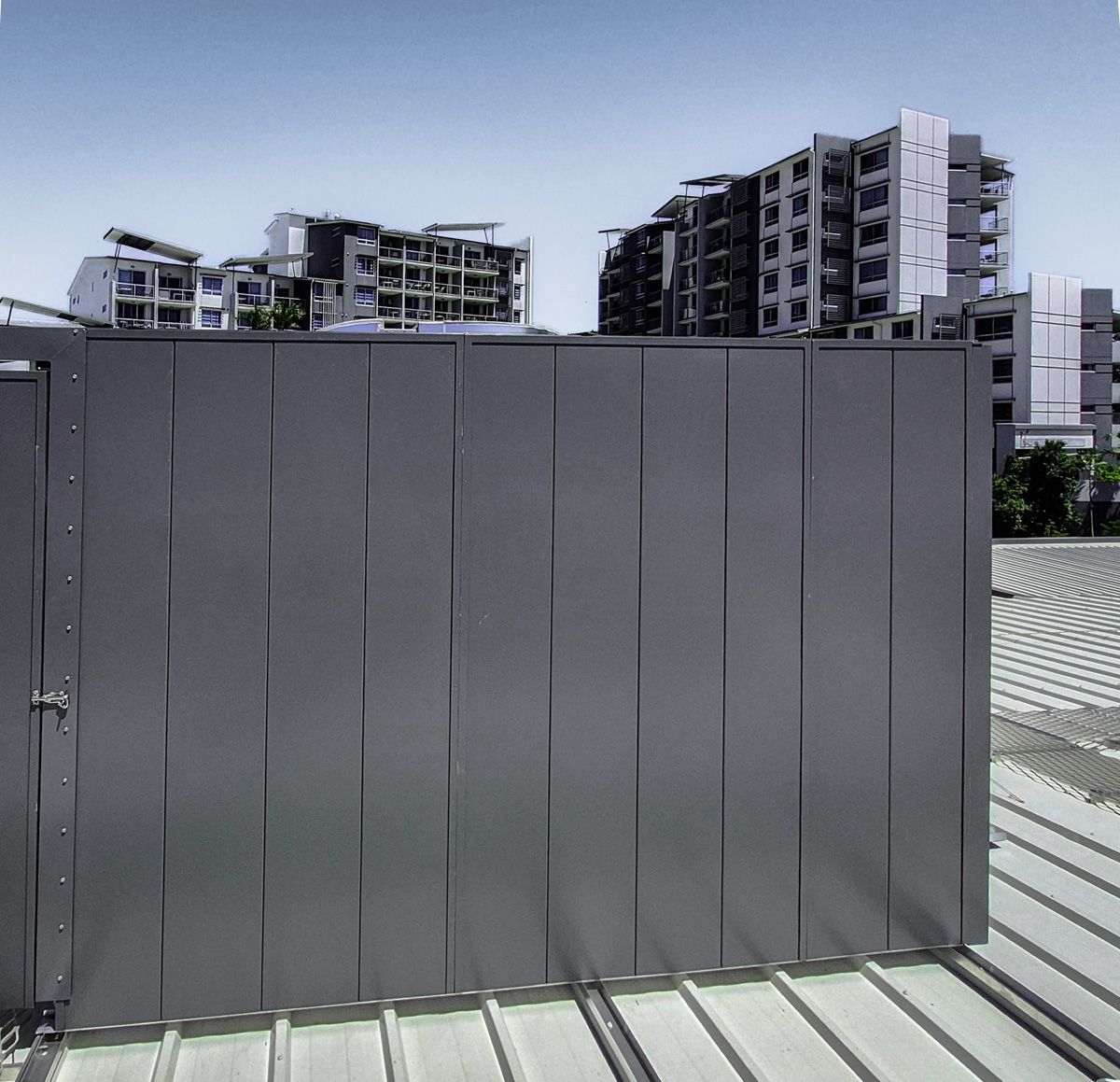
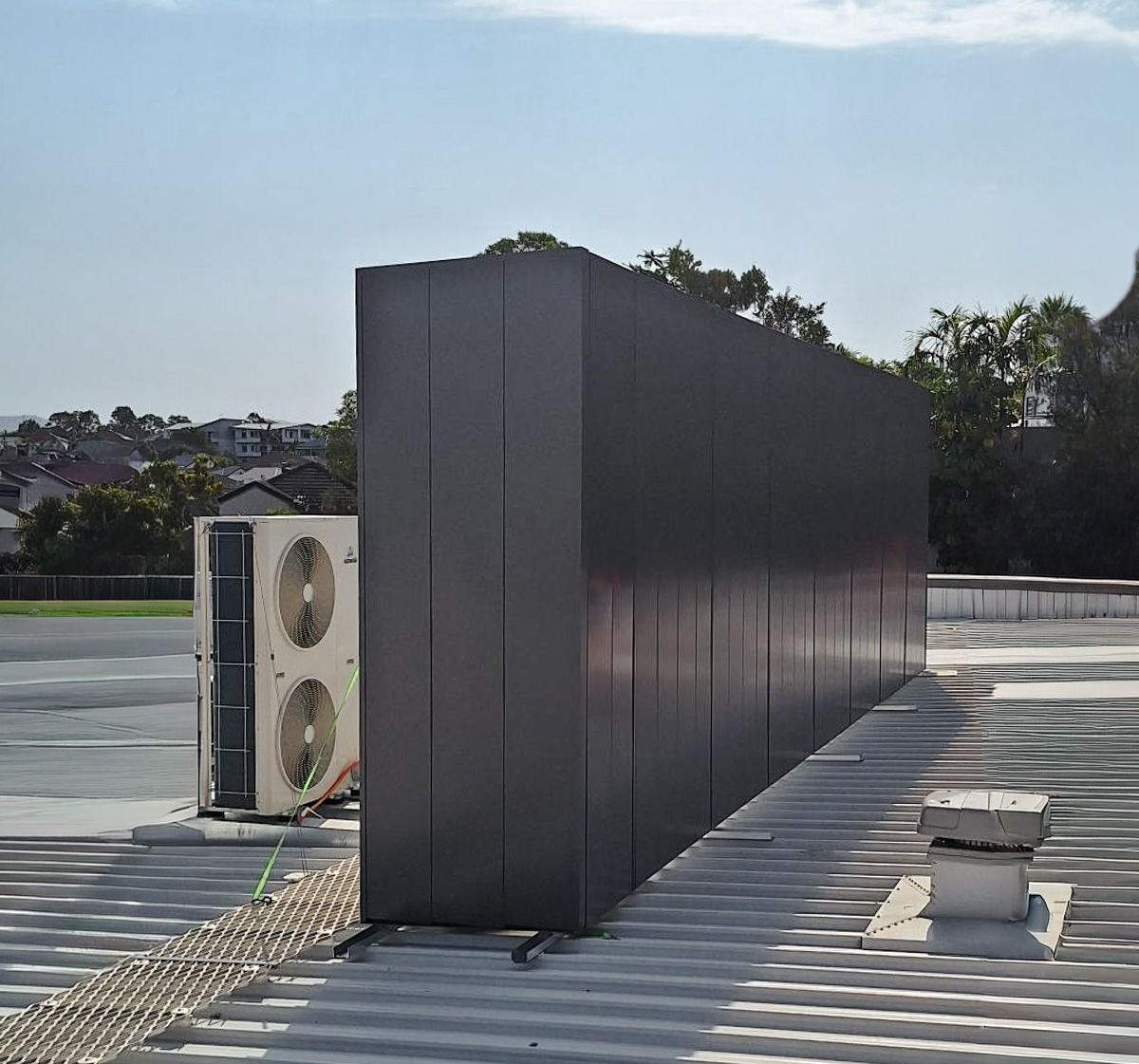
Engineered Plant Acoustic Panels for Australian Conditions
Safetylyne designs and manufactures acoustic panels specifically for rooftop and plant applications in Australia.
Safetylyne acoustic barriers are:
- Structurally engineered to comply with AS/NZS 1170.2 wind loading requirements
- Designed for coastal and high-wind environments
- Fabricated from durable, corrosion-resistant materials and coatings, selected to minimise moisture retention
- Manufactured under quality control protocols
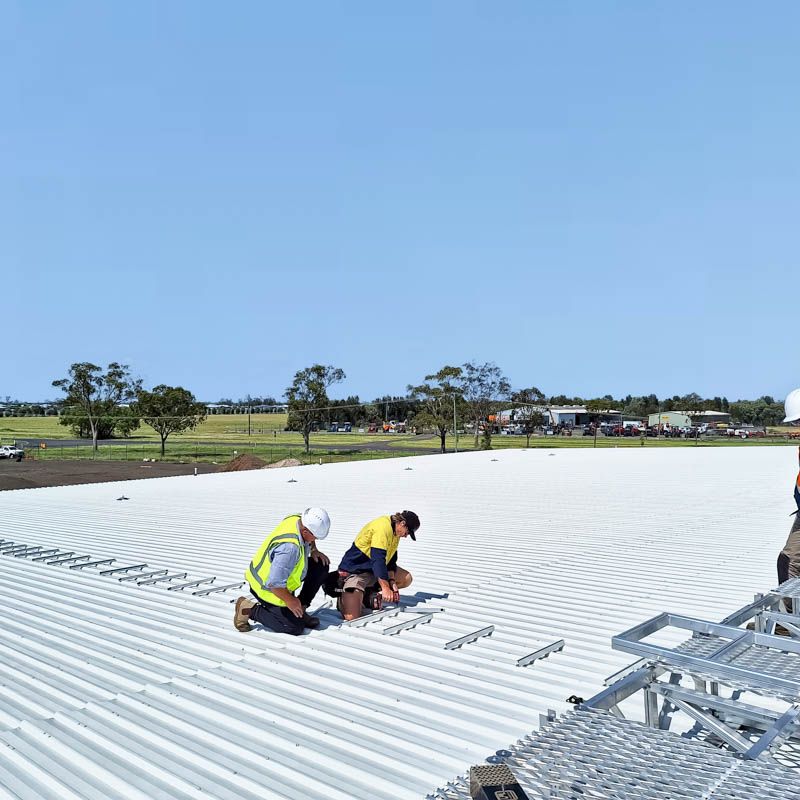
- Integrated with compliant height safety access systems
- Barrier height is set by the geometry between the noise source and the nearest receiver, not a fixed figure. The right height depends on plant elevation, distance to neighbouring properties, and the line of sight between source and receiver. Taller isn't automatically better - this is where site-specific engineering outperforms a rule of thumb.
Materials Used in Acoustic Screens
Acoustic screen performance depends on material selection and panel construction.
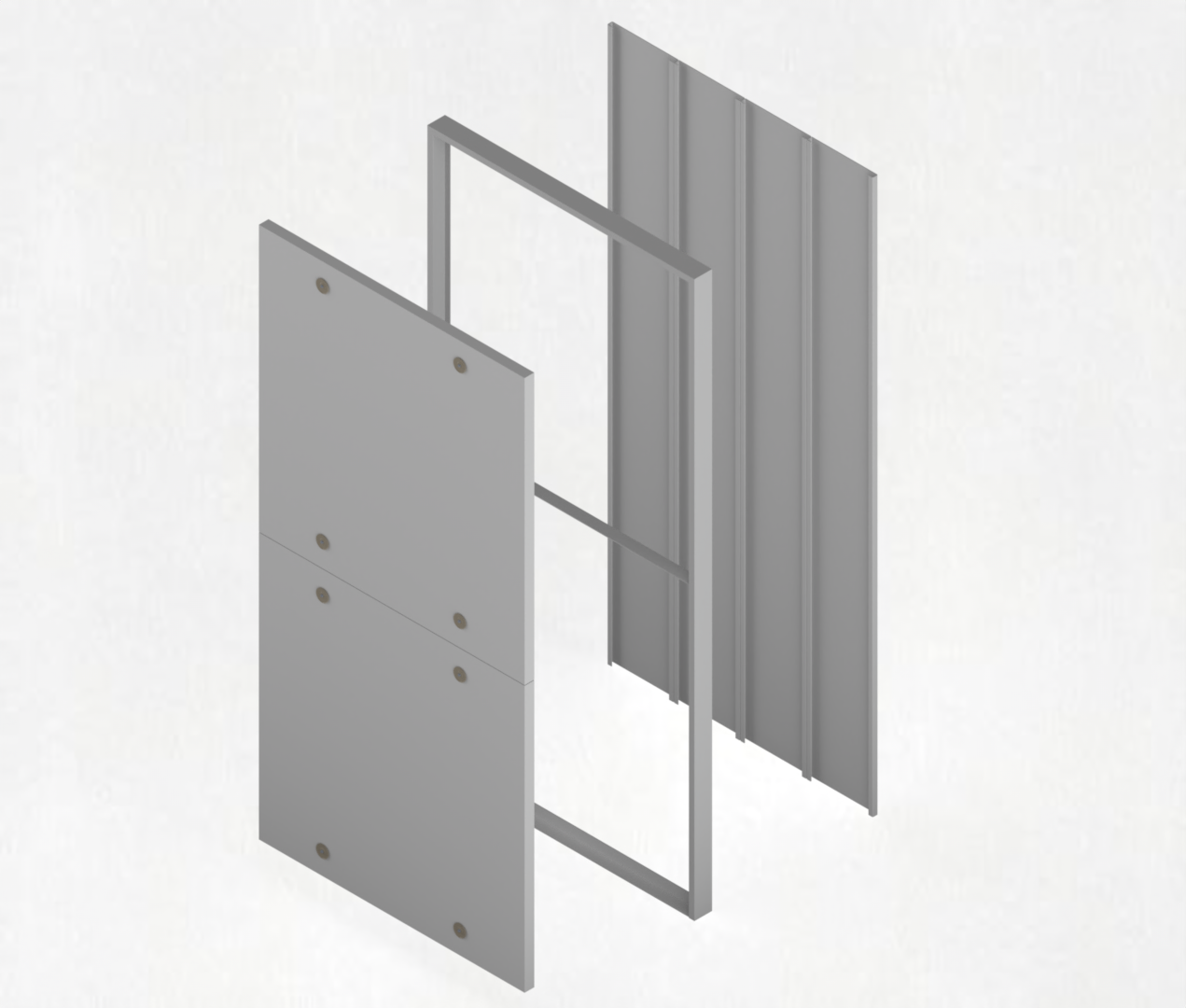
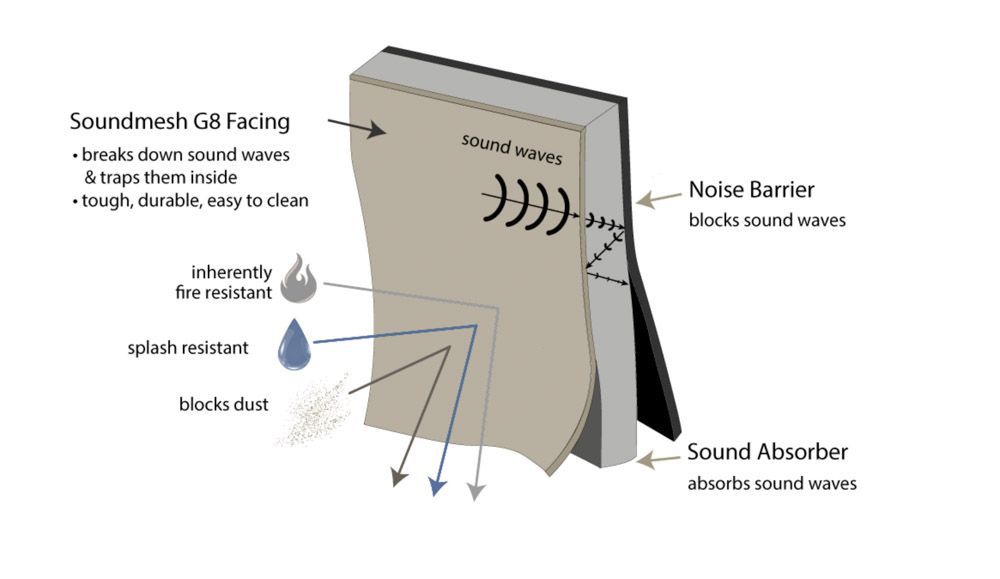
Safetylyne acoustic panels combine a sound-absorbing inner layer with a solid noise barrier backing. As sound passes into the absorptive layer, the material converts that acoustic energy into heat, reducing how much sound reflects back into the space. The solid barrier layer blocks residual transmission through the panel. Together, they reduce noise reaching neighbouring buildings or sensitive areas.
External cladding is generally powder-coated aluminium, selected for corrosion resistance and long-term rooftop exposure. Finishes match project colour specifications and architectural intent.
The absorptive core is protected to minimise moisture retention, maintaining performance in exposed outdoor commercial and industrial environments over time.
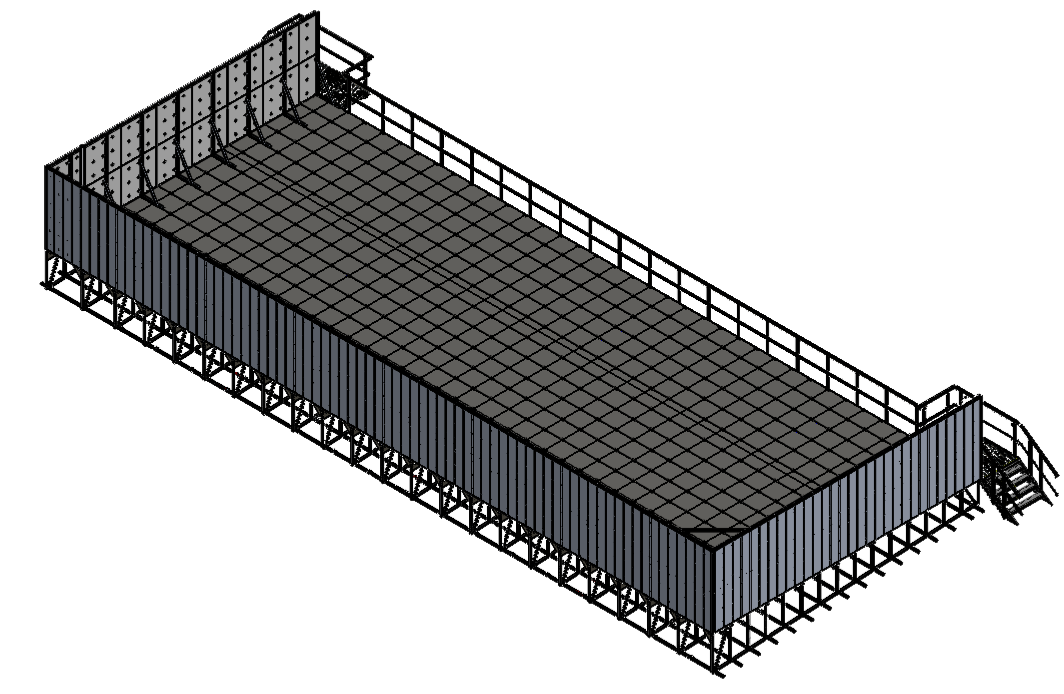
Below is the large condenser deck Safetylyne designed, manufactured and installed for one of our recent projects. Our engineers have developed a structural load design system to achieve sufficient load spreading to avoid point loading on the support structure, with integration into our raft load spreading technology.
Support posts and braces have been innovated to minimise plant deck floor encroachment to optimise deck capacity and reduce overall deck size requirement.
Have a question?
Contact our Height Safety Experts today

