
Aluminium Walkway & Guardrail Systems
Our engineered aluminium walkway and guardrail systems provide designated path access to plant, equipment and maintenance areas.
We design them to maximise user efficiency, protect access pathways, and integrate with your facility and existing systems.
Aluminium Walkway Systems
Safetylyne designs, supplies, fabricates, and installs aluminium walkway and guardrail systems for process plants, industrial facilities, and commercial buildings across Australia.
Every access system is engineered to the access requirements of the site: load rating, span, surface type, and installation constraints.
Structural aluminium gives these systems a long service life with no repainting or recoating required.
Industrial and Commercial Walkway Systems
Industrial sites need walkway systems built around their infrastructure.
Pipe racks, vessels, conveyors, and elevated equipment can create access problems that need engineering, not just hardware.
Safetylyne designs and installs aluminium walkways for industrial and commercial sites.
Systems span existing structures without loading them. Aluminium keeps installed weight low and craneage requirements minimal on live sites with tight access windows.
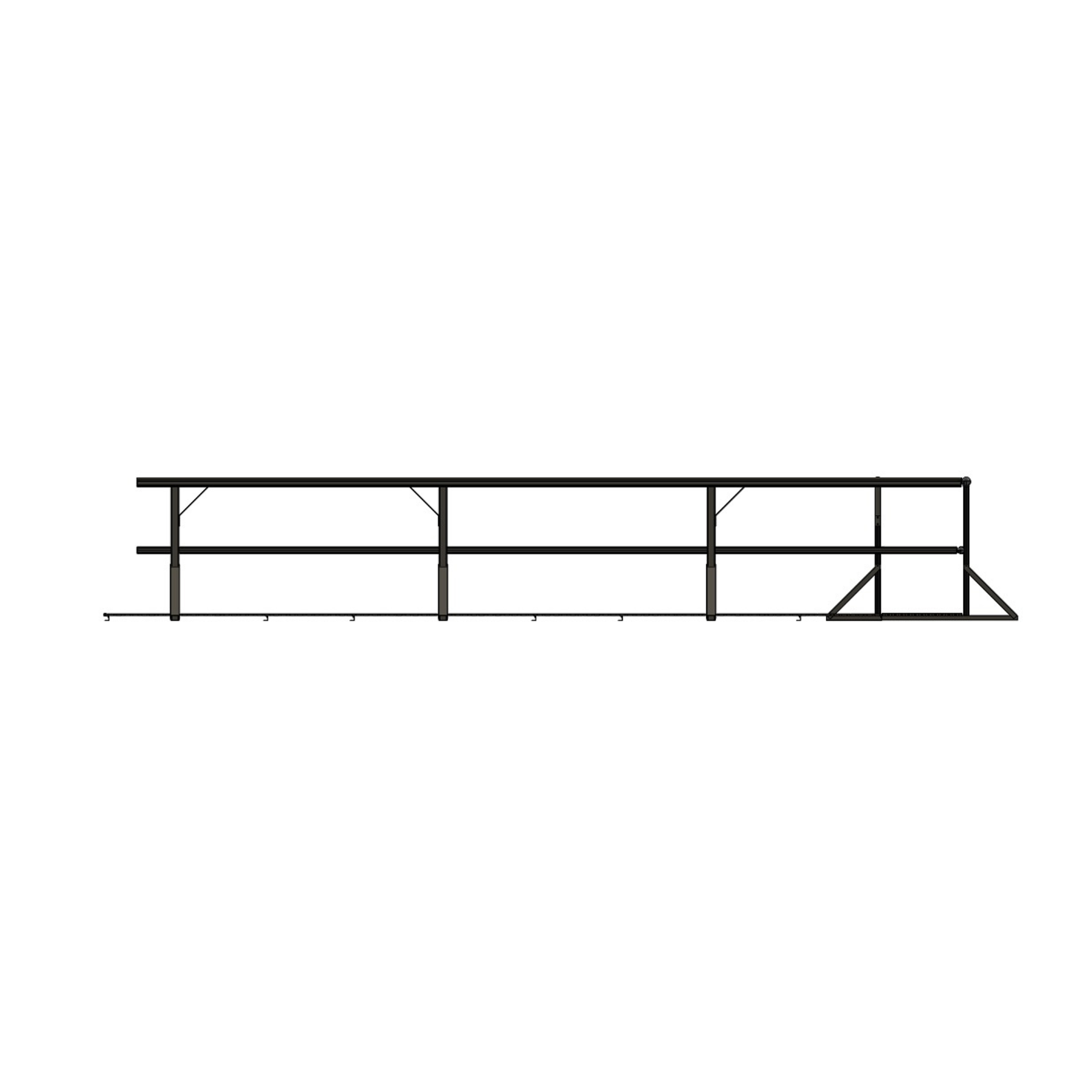

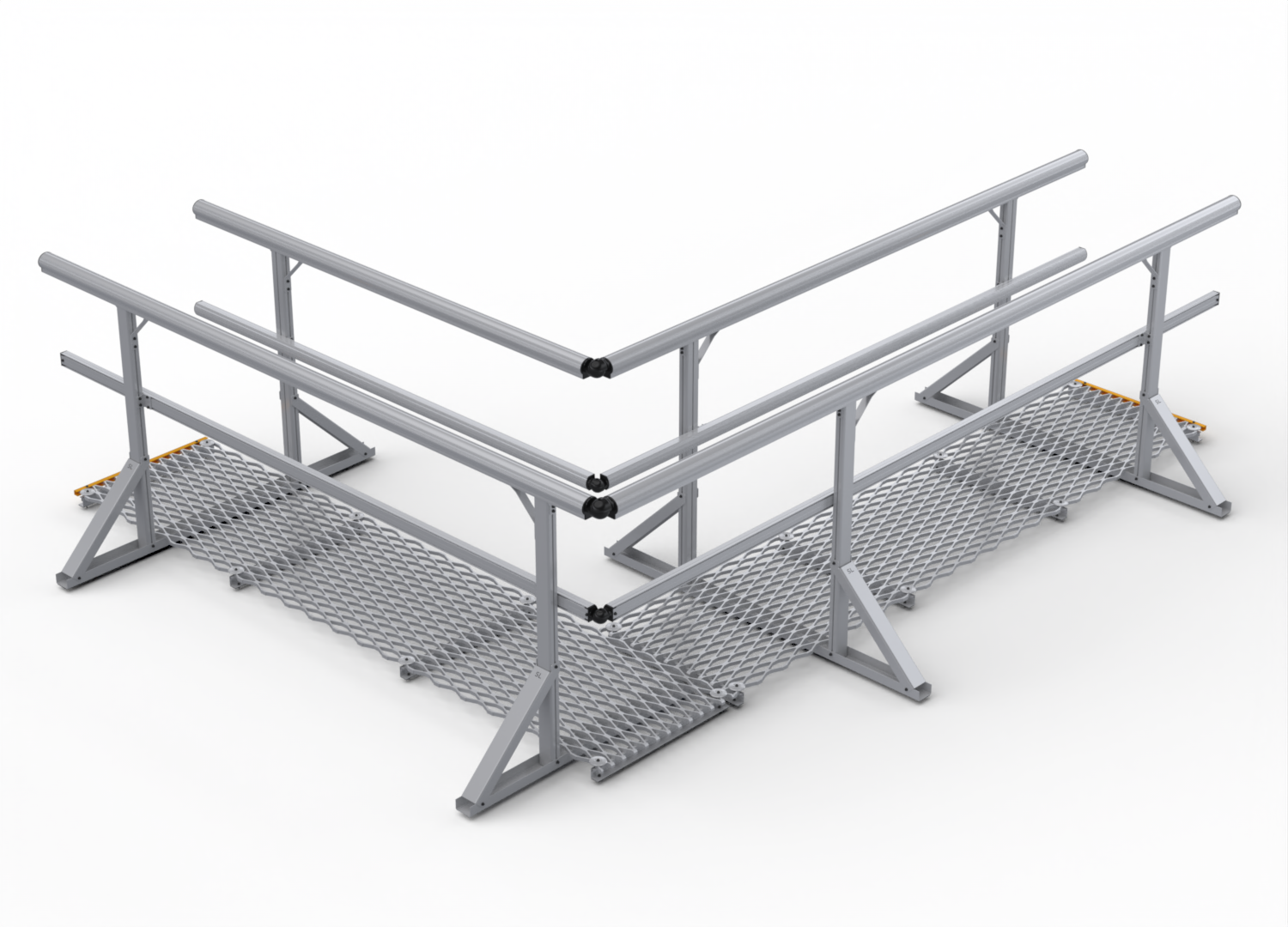
Aluminium Walkway with Guardrail
Guardrail requirements differ across a site
Platform edges, mezzanine perimeters, open structural edges, and equipment access areas each carry different load conditions and fall exposure.
Safetylyne fabricates fixed aluminium guardrail systems to suit each location.
All systems meet AS 1657:2018, which sets minimum handrail heights, post spacing, load requirements, and toeboard specifications. Handrails sit at 1100mm at high-risk edges.
Platform entry points get self-closing gates where required.
Aluminium guardrail performs in atmospheric chemical exposure without repainting.
It is lighter than steel at equivalent strength, which simplifies handling and installation on elevated or restricted sites.
Many sites need walkway and guardrail installed as one integrated structure. Mezzanine perimeters, elevated platform edges, and roof access routes all carry both a walking surface and a fall protection requirement in the same location.
The walkway frame and guardrail posts share the same structural base, which keeps the installation faster and the finished structure cleaner than fitting guardrail as an add-on after the walkway is in place.
Aluminium keeps the walkway and guardrail structure light enough for craneage-limited or occupied sites, and it matches the strength-to-weight advantage over steel across both the walkway and the guardrail.


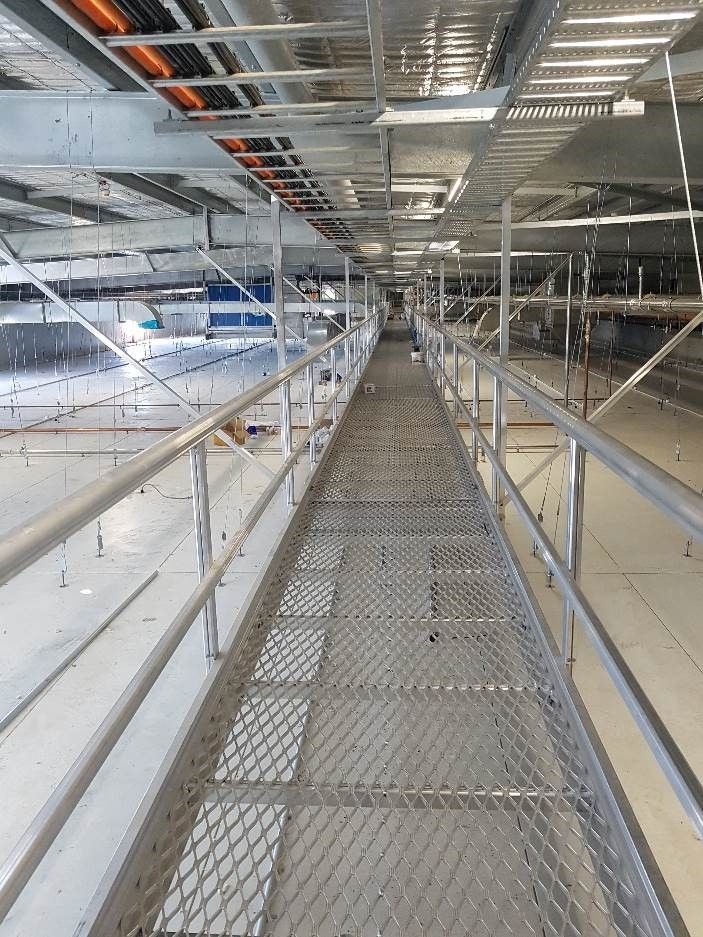
Elevated Walkways for Comprehensive Safety and Access
Advanced gantry walkway systems, also known as floating walkways, suspended catwalks, and elevated walkway solutions, provide secure and reliable access for complex environments.
Gantry walkways provide elevated access across complex sites where a standard ground-level walkway isn't practical, including manufacturing plants and facilities with equipment spanning multiple levels.
See our full range of
gantry platforms and suspended and elevated walkways.
Foldable Guardrails for Flexible Safety and Aesthetics
Fold-down guard rails, also known as collapsible or retractable guardrail systems, give you fall protection while keeping the rooftop or facade clean when the guardrail isn't in use.
Read more about choosing between fixed and foldable guardrails.
Fibre-Reinforced Polymer (FRP) walkways
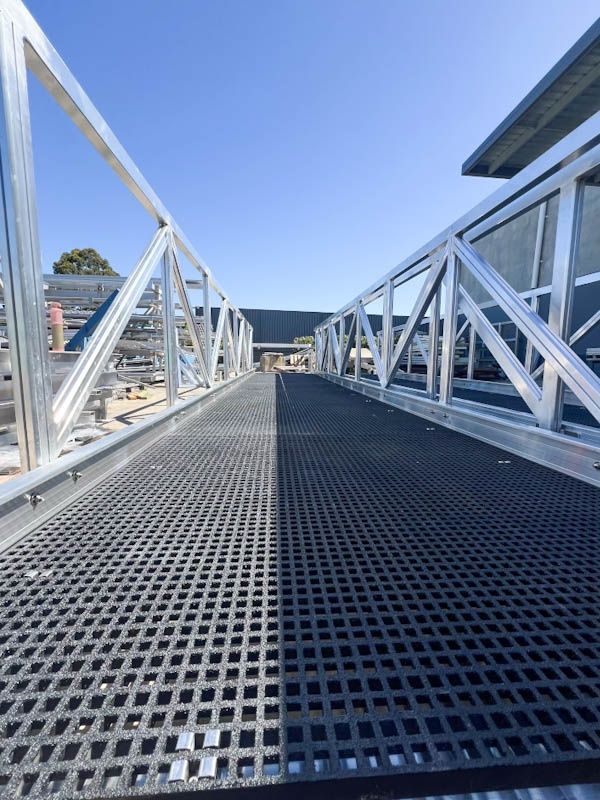
FRP (fibreglass-reinforced polymer) walkways can be specified where aluminium isn't the right material for the environment, typically where the surface faces direct, repeated contact with strong acids, alkalis, or chlorinated compounds, or where non-conductive, non-sparking properties are required.
FRP Walkways features:
+ Lightweight with High Strength. Significantly lighter than metal or concrete, simplifying transport and installation.
Corrosion Resistant. Doesn't corrode in coastal or chemically exposed industrial environments.
+ Electrically Non-Conductive and Non-Sparking. Non-galvanic and non-magnetic, suited to electrically classified zones and explosive atmospheres.
+ Dimensionally Stable. Holds shape and structural integrity across temperature extremes, with low thermal conductivity and RF transparency for sensitive equipment areas.
+ UV Stable. Resists fading and degradation under sustained sun exposure.
Safetylyne supplies FRP walkways powder-coated in yellow for high visibility or grey to minimise visual impact, matched to your site's safety requirements and building aesthetic.
Safetylyne’s FRP walkways can be tailored to match your specific design needs and building aesthetic and colour, ensuring that functionality meets form without compromise.

Walkway Grating Options
Walkway mesh grating suits most industrial and commercial applications.
Safetylyne fabricates grated walkways meets AS/NZS 4586 for slip resistance, drains freely, and handles regular maintenance traffic.
Aluminium chequerplate works where a solid surface is needed - in enclosed plant areas or cleaner environments where drainage is managed separately.
FRP grating is specified when the walking surface faces direct contact with acid liquids, alkalis, or chlorinated compounds, or where non-conductive properties are needed.
The aluminium structural frame stays in place while only the grating surface can be changed to suit the application for industrial sites.
Guardrail Requirements Under Australian WHS Regulations
AS 1657:2018 sets the design and construction requirements for fixed guardrails on walkways, platforms, stairways, and ladders. AS/NZS 4994 covers temporary edge protection systems for construction and maintenance sites.
When Are Guardrails Required For Edge Protection Under Regulations?
Guardrails are required wherever a fall risk exists at platform edges, mezzanines, roof perimeters, and open structural edges on both permanent and temporary worksites.
Construction sites carry their own thresholds under state WHS regulations: a guardrail is required where the fall risk exceeds 3 metres for housing construction and 2 metres for other construction work.
Designed for compliance with AS 1657, these height safety systems feature durable, corrosion-resistant aluminium and slip-resistant surfaces to withstand Australia’s tough industrial environments. Ideal for enhancing worker safety during inspections and maintenance.
Compliance with Australian Standards
To ensure the highest level of safety, guardrails must comply with relevant Australian standards:
- AS/NZS 4994 - This standard covers temporary edge protection systems, ensuring that guardrails are designed and installed to withstand typical site conditions.
- AS/NZS 1657 - This standard outlines the design and construction of fixed platforms, walkways, stairways, and ladders, including the appropriate use of guardrails to prevent falls.
Following both Standards and approved Codes of Practice is essential for creating safe, compliant access systems - and avoiding the risk of legal or safety issues on-site.

Our team of height safety experts is committed to providing cutting-edge safety solutions, designed to meet your specific needs while ensuring full regulatory compliance.
Choose a complete solution from design to installation, ensuring that your complex access systems projects are seamlessly integrated into your operations.
Contact SAFETYLYNE today to get your access solved.


