Designing Roof Plans To Integrate Access and Compliance
When designing a roof plan, it is important to understand that access and height safety perform best when they are considered at the same stage.
Integrating roof access early supports structural coordination, roof waterproofing integrity, façade design and long-term building maintenance design. It also avoids the need to adjust layouts later in documentation.
This guide outlines how to incorporate roof access and height safety into commercial and industrial roof plans from concept stage.
What a Coordinated Roof Plan Should Include
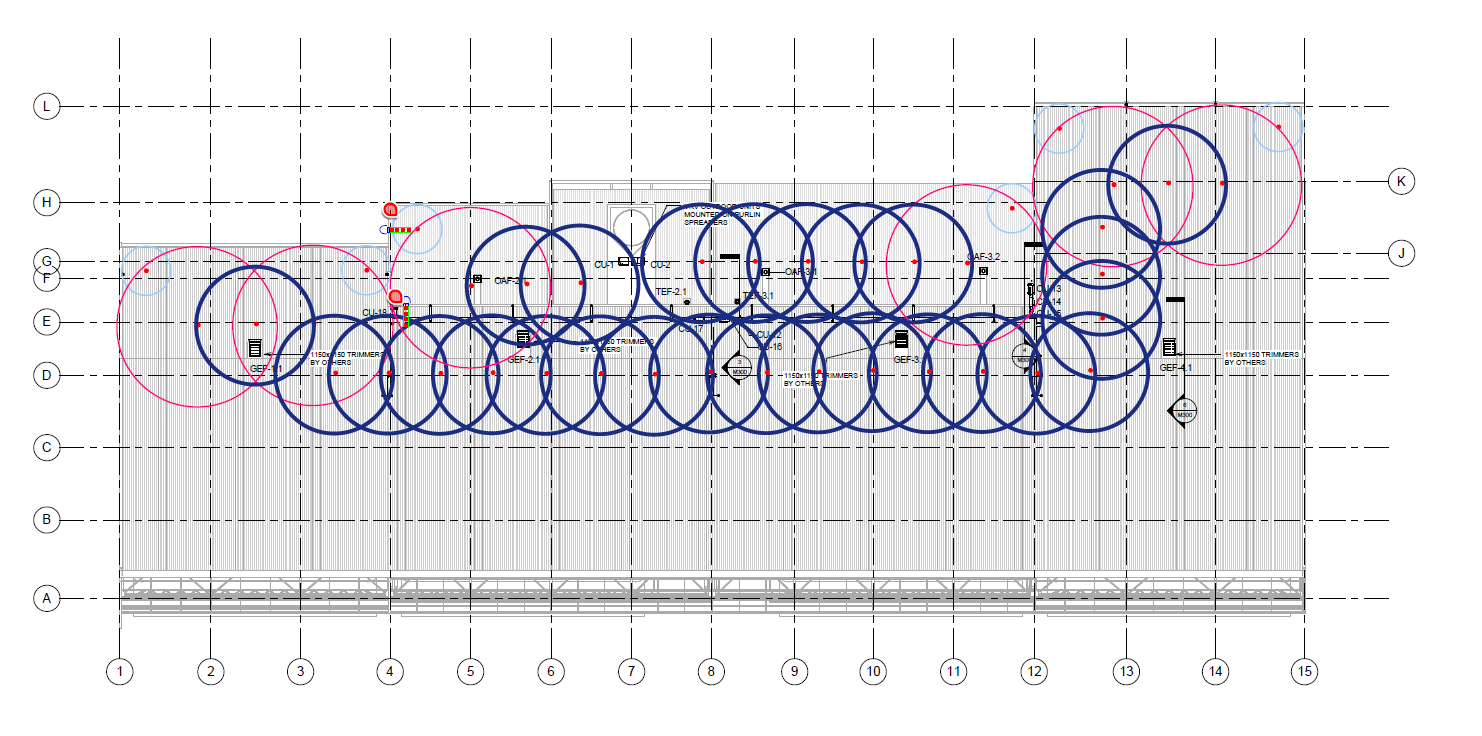
A commercial roof plan is more than an equipment layout. It should clearly identify how people safely access and maintain that equipment.
A coordinated roof access and safety plan typically includes:
- Roof access entry point location
- Clear access path from entry to each serviceable asset
- Maintenance clearance zones around plant
- Edge protection strategy
- Stair or ladder classification
- Structural load transfer strategy for platforms
- Penetration and flashing detailing
- Identification of restricted access areas
- Documenting these elements early creates clarity for engineers, builders and service contractors.
Integrating Roof Access at Concept Stage
1. Roof Access Entry
The type of access required depends on building classification, frequency of maintenance and user type.
Common roof access methods include:
- Internal stair access
- Roof hatch with ladder
- External fixed ladder
- Restricted access stair designed to AS1657
- The selected access type influences required width, handrails, landings and barrier provisions. Confirming this at concept stage supports accurate spatial planning.
2. Access Path Design
Access should provide a continuous, logical route from the entry point to each serviceable asset.
Here is what you need to consider:
- Minimum compliant widths
- Changes in direction and level
- Step-over requirements
- Proximity to roof edges
- Separation from fragile roof elements
- Clear working space around equipment
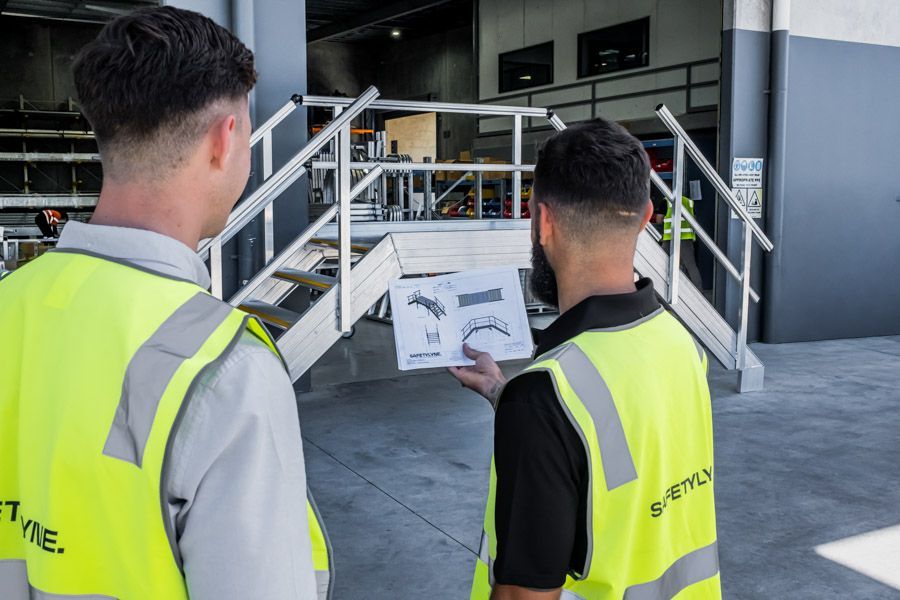
Access paths should not rely on assumptions. They should be dimensioned and coordinated.
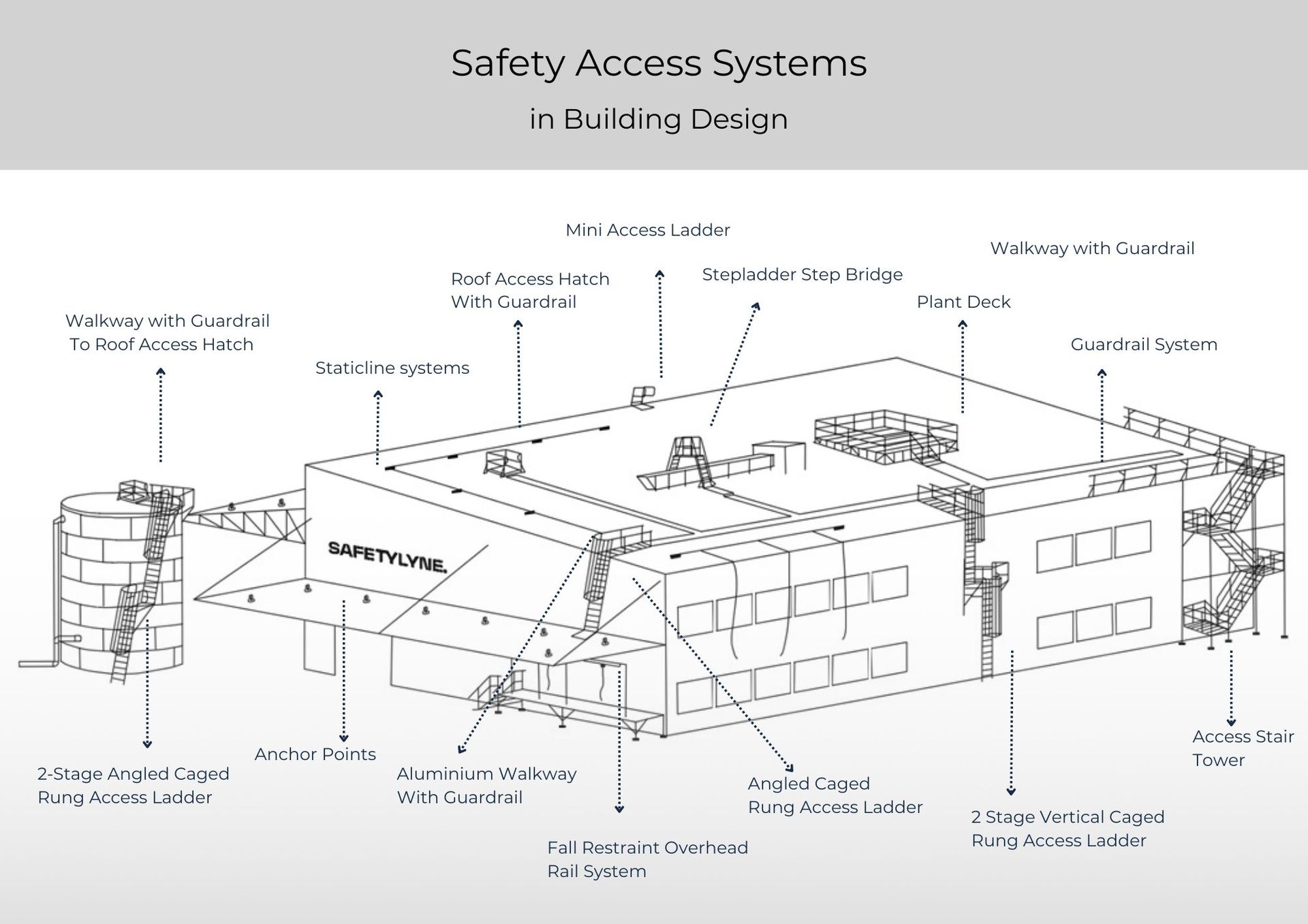
3. Edge Protection Strategy
Roof edge protection may be achieved through:
- Compliant parapet height
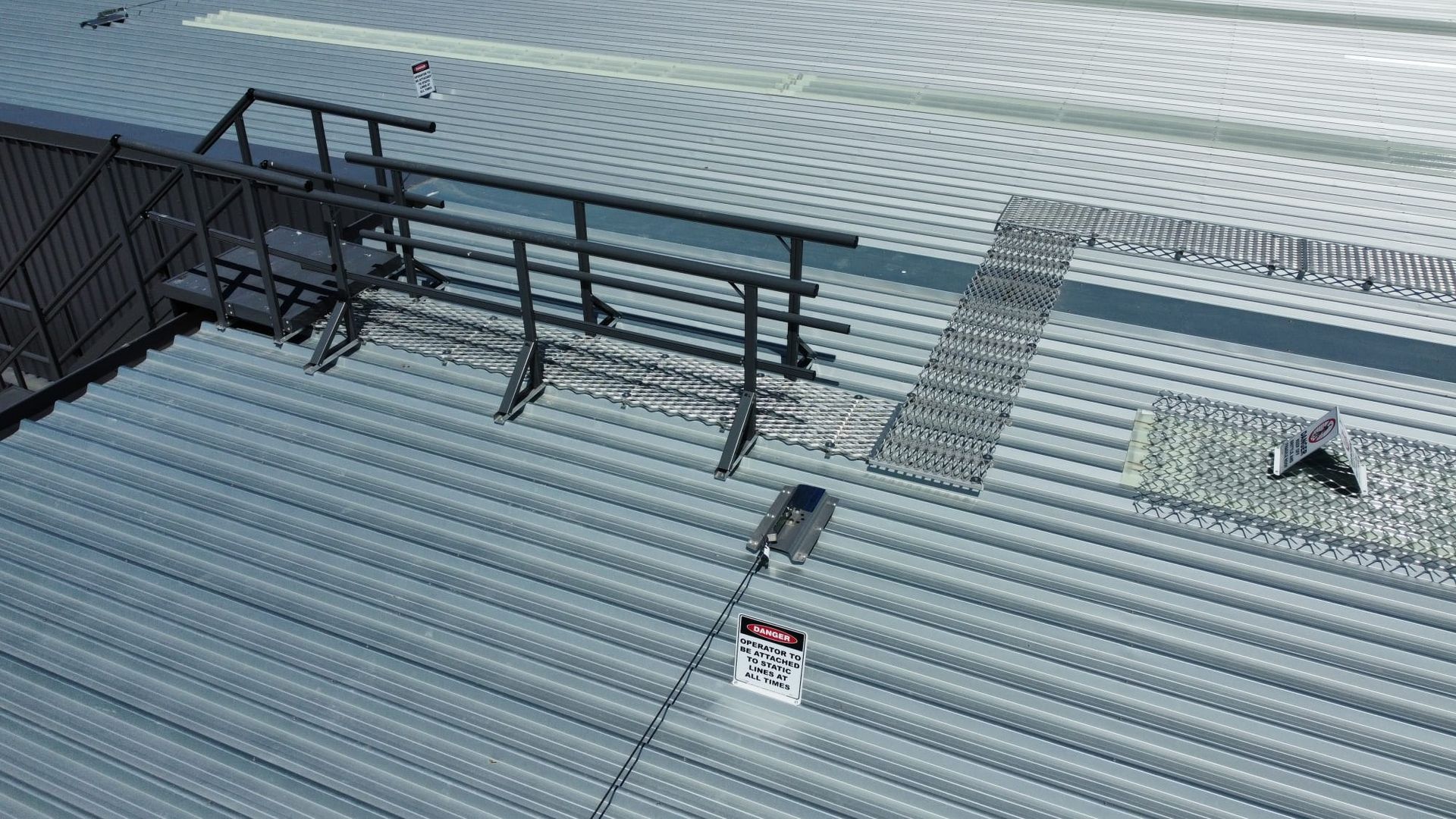
- Permanent guardrails
- Collapsible guardrails
- Walkway and restraint systems
- Engineered anchor systems
The fall prevention hierarchy applies. Elimination and passive protection are prioritised before restraint or arrest systems.
Edge protection strategy should be resolved before façade and parapet detailing is finalised.
4. HVAC Plant Platform and Structural Integration
Plant platforms must transfer load to primary structural elements rather than secondary roof components.
Here is what roof plans should consider:
- Load distribution points
- Structural truss alignment
- Fixing methodology
- Impact on roof integrity
- Clearance for safe access and servicing
Early coordination between structural engineer and height safety designer reduces later revisions.
5. Waterproofing and Flashing Coordination
Roof penetrations for hatches, ladders and platforms require careful detailing.
Roof plans should identify:
- Penetration locations
- Flashing requirements
- Separation from drainage paths
- Coordination with roofing contractor
- Waterproofing integrity is a critical design consideration and should not be treated as an afterthought.
Common Roof Plan Coordination Gaps
The following are commonly identified during documentation review:
- Access path shown but not dimensioned
- Hatch location conflicting with services
- Guardrails impacting façade intent
- Maintenance zones not allowed around plant
- Stair width not aligned with classification
- Acoustic screens obstructing access routes
- Platforms detailed without structural load clarification
- Addressing these during early design stages supports smoother delivery.
Roof Plan Compliance Considerations in Australia
Roof access and height safety design intersects with several standards.
NCC Volume One governs stair construction where applicable.
AS1657-2018 applies to fixed platforms, walkways, stairways and ladders intended for restricted access areas such as plant and maintenance zones.
AS/NZS 1891 applies where fall arrest or anchorage systems are specified.
Compliance pathway should be clarified during design, particularly where restricted access stairs are proposed.
Frequently Asked Questions
Roof Entry Platforms
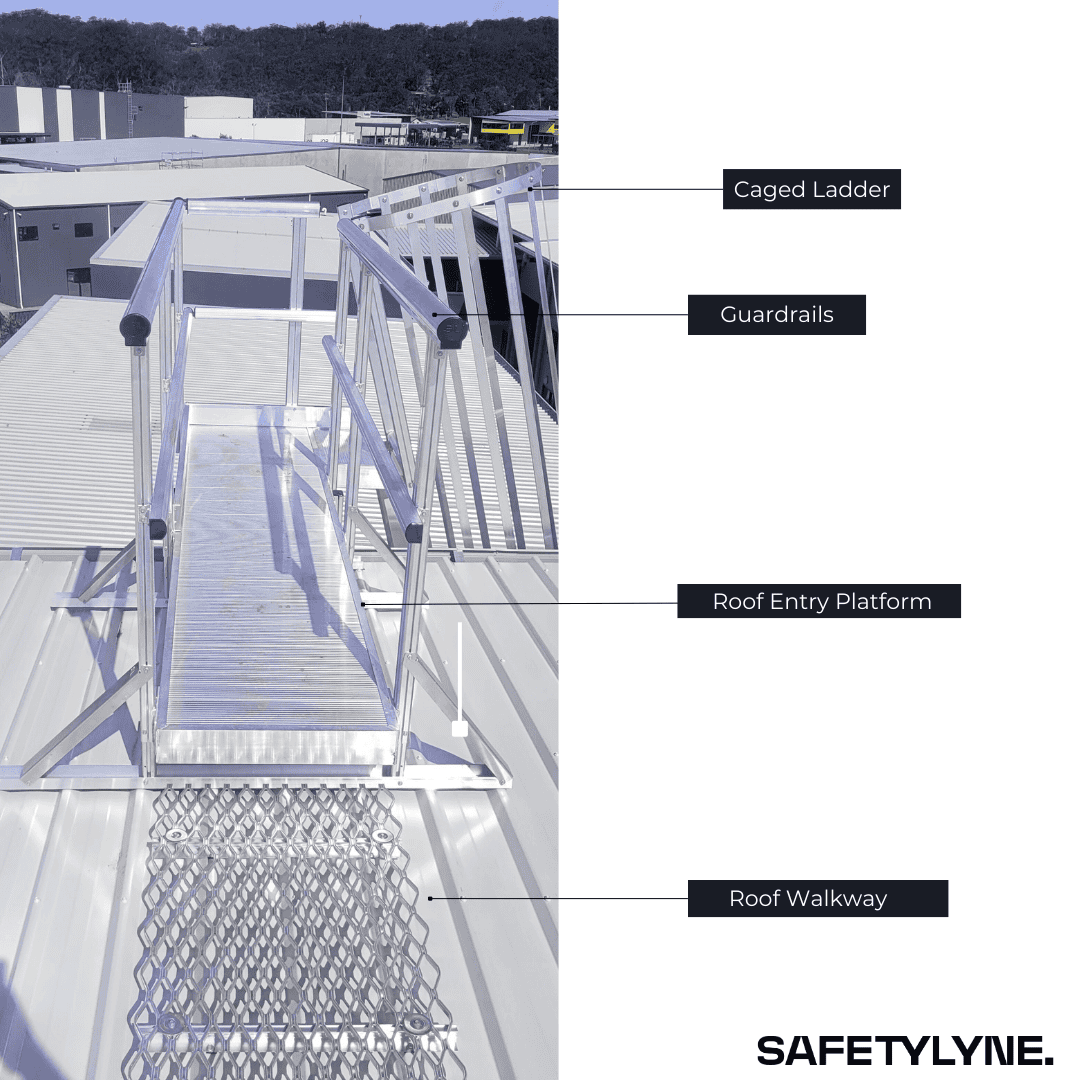
Roof entry platforms connect ladders and stairs to the roof entry point.
The difference between a roof entry platform and a roof platform:
Instead of supporting equipment, these compact platforms provide a safe landing point at the top of a roof ladder or stairs.
They connect directly to roof walkways and are typically fitted with guardrails, providing a compliant and safe transition for workers accessing HVAC units, solar panels, or other roof-mounted equipment.