How to Maintain Building Access Safety Without Compromising Building Aesthetics
Height safety systems don't have to compete with good architecture
Access systems are part of a building's operational design.
They determine how a maintenance crew moves from the roof access point to the roof work area, and whether the systems that get them there read detailed as intentional design or afterthoughts.
When height safety is part of the design process from the start, access routes follow the roof geometry, fixing points coordinate with the structure, and the building is detailed exactly as intended.
We work with architects and design teams from the schematic stage - coordinating access routes, fixing locations, and system profiles so height safety integrates with the building and the operational requirements, rather than competing with it.
The common misconception
The building access safety systems can be designed and integrated around the other building elements. However, it is a much better outcome for all stakeholders if the building access system design is coordinated in conjunction with the other building elements to acheive synchromised design optimisation.
Getting that right requires early input, rather than late design intervention to resolve a design flaw to acheive and under par semicompliant result, caused by poor project coordination.
Height safety systems are often introduced late in a project or retrofitted into an existing building.
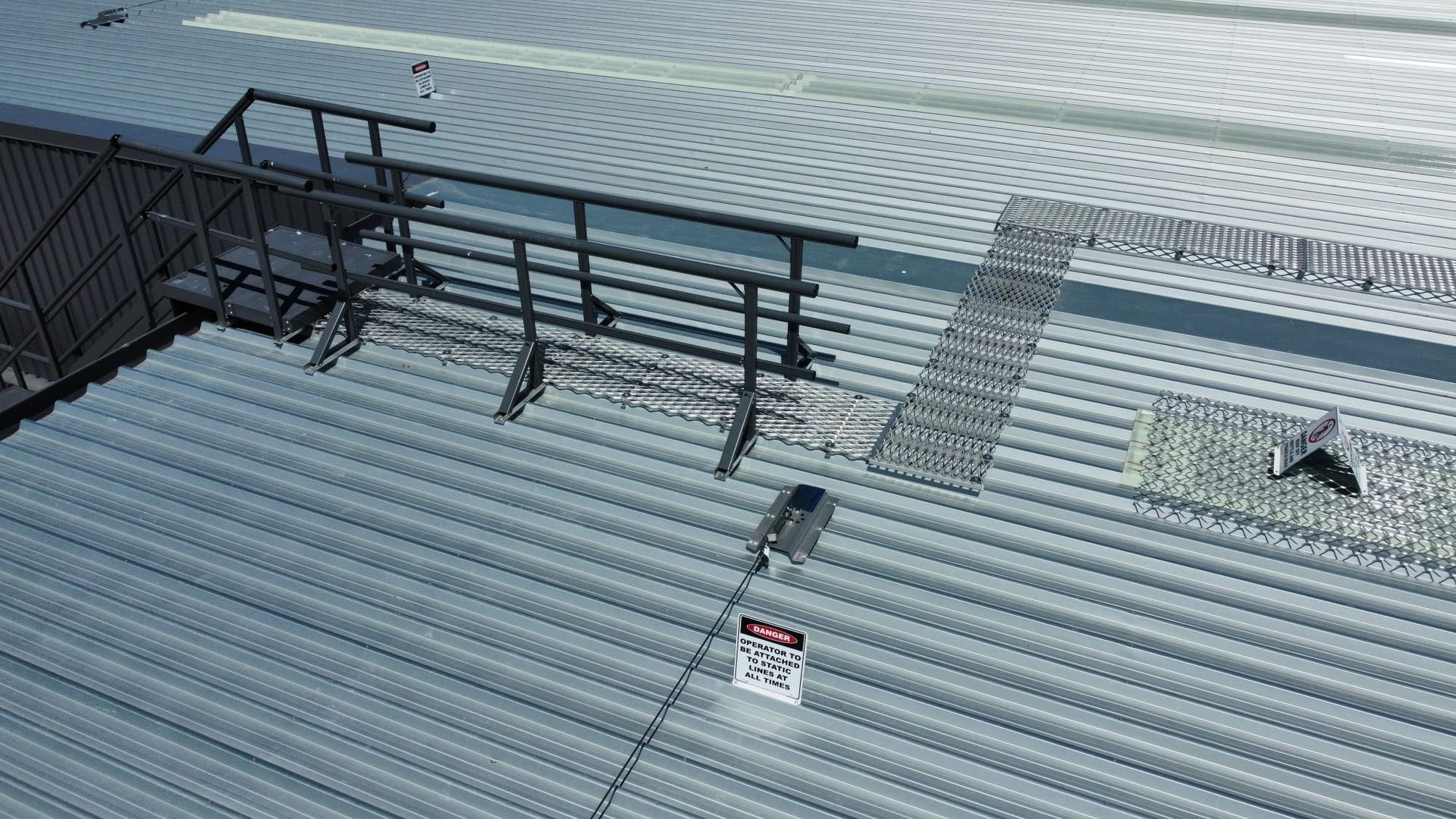
When this happens, they can disrupt the architecture - guardrails sit above parapets, ladders appear in visible locations, and rooftop equipment becomes visually cluttered, or can not be maintained as required to retain product warranties.
This is not a problem with safety systems themselves. It is often a result of insufficient planning integration when considering building operational and maintenance requirements in the design stage.
When height safety is considered early, access and fall protection systems can be engineered to support both
compliance and architectural intent.
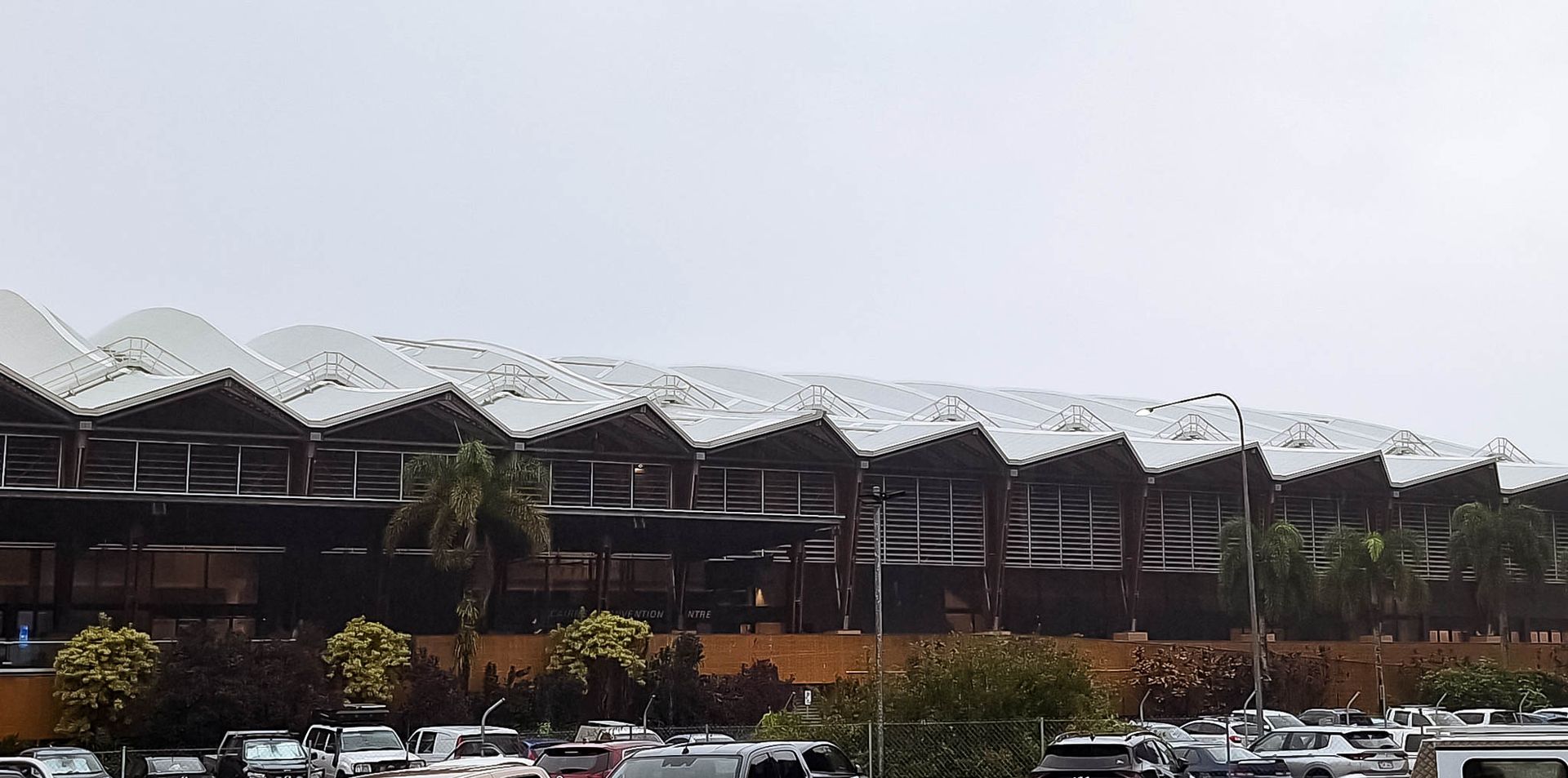
Modern systems allow buildings to maintain clean rooflines, controlled sightlines, and a cohesive appearance while still providing safe access for maintenance.
The Real Design Challenge: Safety vs Aesthetics
Architects and designers often raise the same concerns:
- Guardrails visible from street level
- Rooftop clutter affecting the skyline
- Fire escape stairs appear visually heavy
- Anchor points are scattered across roofs
- Maintenance access is disrupting the façade design
- Plant and equipment access panels, doors, or platforms are positioned obtrusively
These concerns are valid. However, they can usually be solved through thoughtful system selection, design and early coordination.
Understanding the Hierarchy of Controls in Roof Safety Design
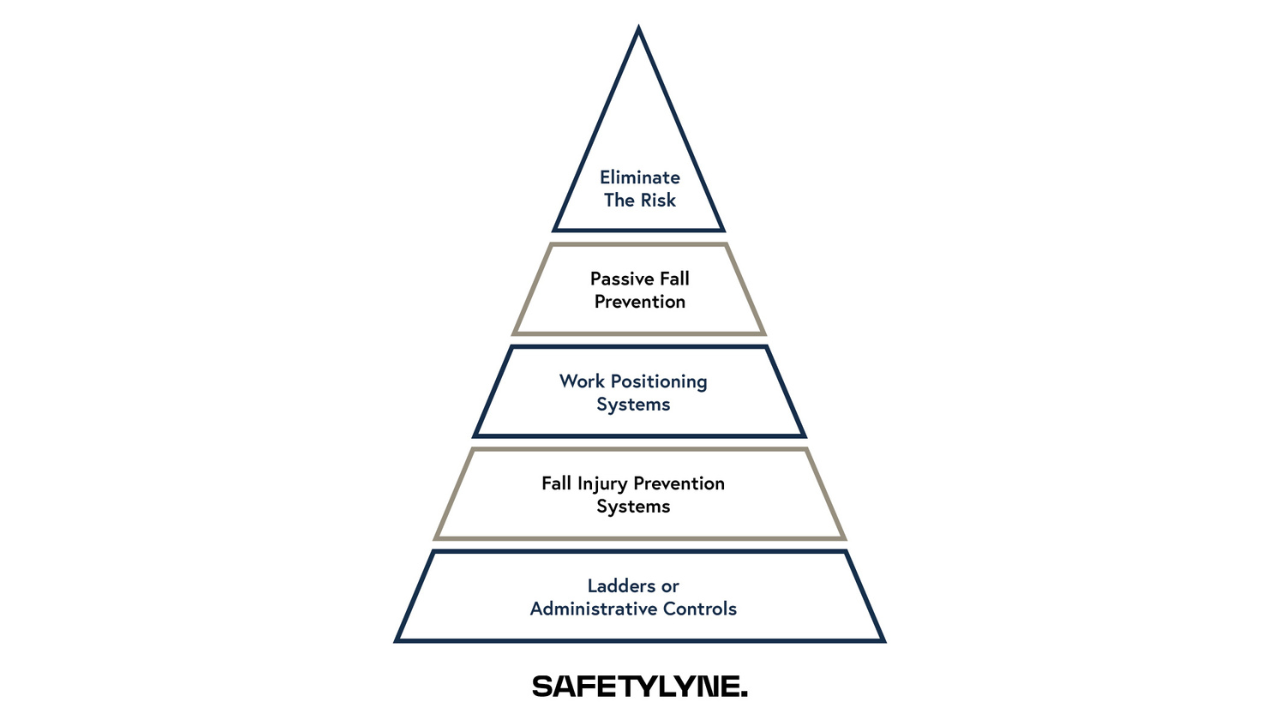
When selecting a roof safety system, designers should consider the hierarchy of controls and frequency of access.
The hierarchy of controls prioritises solutions that eliminate or engineer out risk wherever possible.
- Guardrails (preferred control)
Guardrails provide collective protection and remove the need for workers to rely on personal fall protection systems. - Horizontal life lines, rails or anchor systems
Used where guardrails are not suitable or where access is infrequent. - Personal fall restraint/ arrest systems
Used when other controls cannot be implemented.
While guardrails are typically the safest option, they may not always be the most appropriate choice for every building.
In locations where maintenance access is infrequent, temporary systems may be a more suitable solution.
Design Strategies That Preserve Building Aesthetics
Modern height safety systems can be integrated into building design with minimal visual impact.
+ Foldable Guardrails
Foldable or collapsible guardrails provide compliant edge protection when required, but remain folded below the parapet line when not in use. They are often unnoticed from the street level.
This approach allows designers to protect workers while preserving the building’s architectural profile.
+ Concealed Anchor Systems
Anchor systems used for façade maintenance can be installed as a threaded ferrule with a flush cap screw instead of permanent eyebolts.
The caps maintain the building’s visual appearance. When maintenance work is required, the cap can be removed so that a certified eyebolt can be fitted.
For example, Safetylyne has applied this approach to institutional projects, including the Oral Health Precinct in Brisbane, where rail access and anchor point façade maintenance systems were required without affecting the building’s design.
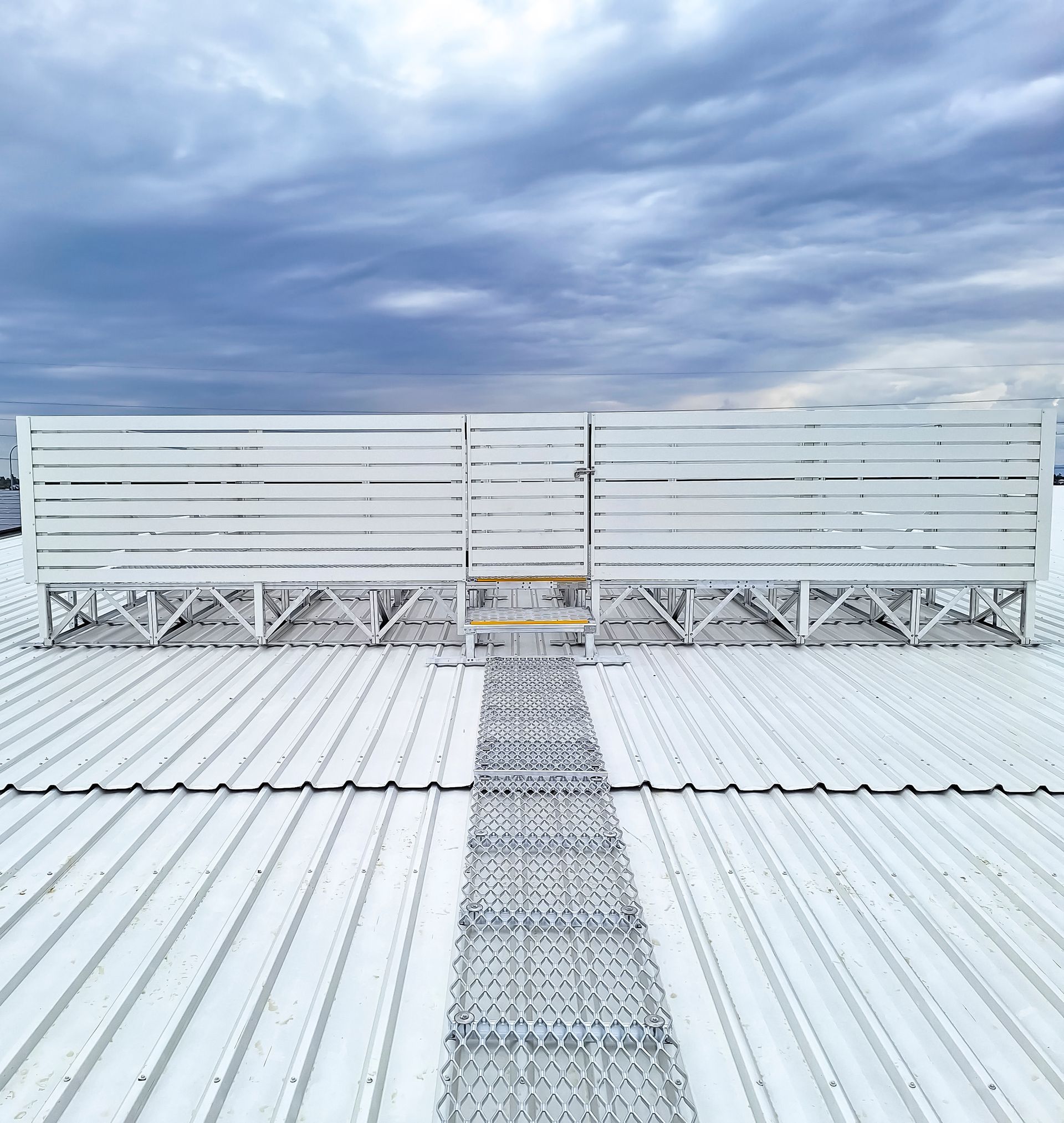
Architectural Screens for Plant and Fire Escape Stairs
Where rooftop structures such as plant areas or fire escape stairs affect the appearance of the building, architectural screening can be used.
Common solutions include:
- Louvre screens
- Perforated sheet screens
- Powder-coated façade panels
These screens can conceal rooftop infrastructure while maintaining ventilation and airflow.
They can also create a clean “blank wall” appearance where designers want to maintain a consistent façade.
Colour-Matched Safety Systems
Safety systems do not have to appear industrial.
Guardrails, ladders, screens, platforms, and access systems can be powder-coated to match the building’s colour palette. With design discretion, safety systems can blend into the architecture rather than stand out against it.
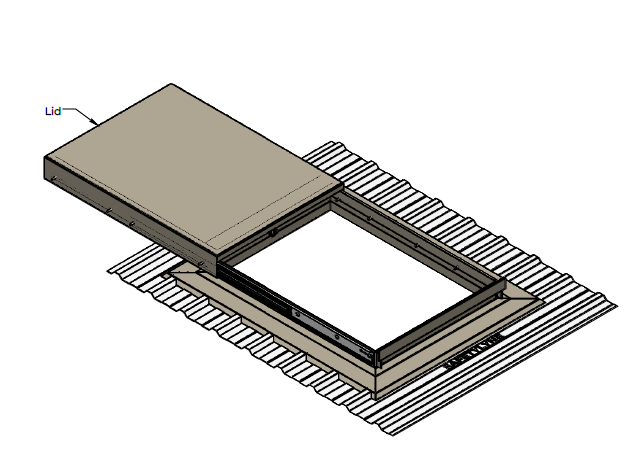
Sliding Roof Hatches
Roof access points can also affect visual appearance.
Sliding roof hatches provide compliant access while maintaining a low visual profile on the roof surface.
Rigid Rail
Rigid rail systems can be positioned strategically to reduce their visibility while still allowing safe rope access for facade and roof maintenance tasks. Rigid rails can be installed on concrete, structural steel, and roof sheet systems, providing no deflection when under fall arrest/restraint load.
Davits
Davit systems can be installed to masonry and steel structures to provide restraint access to facades, gardens, and abseil access areas.
Ladder Brackets
Portable ladder brackets allow temporary ladder access without permanently fixing ladders to the building. This reduces visual impact on façades and rooflines while still providing a compliant access solution when required.
They are typically used in areas with infrequent access, where permanent access systems would introduce unnecessary visual clutter and would be physically impractical in high-traffic areas.
When Should Height Safety Be Considered?
Height safety systems should ideally be addressed during concept or schematic design.
Early integration allows architects and engineers to:
- control rooftop sightlines
- conceal safety systems below parapets
- coordinate structural fixing locations
- reduce rooftop clutter
- design logical maintenance access routes
Late-stage installations rarely achieve the same result.