
Roof Walkway Installation: Key Considerations for a Compliant System
Roof Walkway Installation: What You Need to Get It Right
A roof walkway that fails to meet installation requirements is a compliance problem before it is a safety problem. The two tend to arrive together.
This is what AS 1657:2018 standard requires for roof walkway installation in Australia, practical considerations that determine whether a system performs long-term, and what to look for when choosing an installer / supplier.
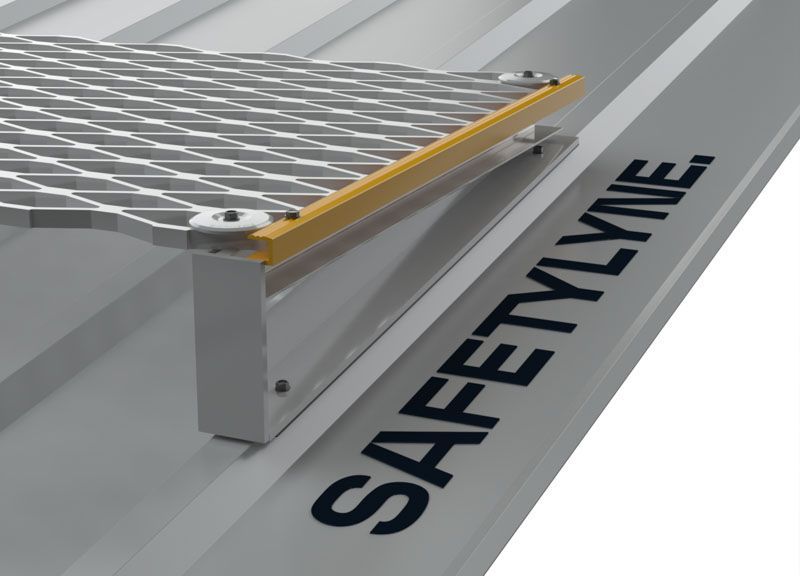
Australian Standards for Roof Walkway Installation
AS 1657:2018, Fixed Platforms, Walkways, Stairways and Ladders, is the governing standard for all fixed roof walkway systems in Australia.
It applies under the Work Health and Safety (WHS) Act across every state and territory and covers platform dimensions, angles, and step heights, where guardrails are required, handrail heights, load ratings, slip resistance, and fixing requirements.
For slip resistance, grating surfaces must meet AS/NZS 4586. Structural loads are designed to AS/NZS 1170.1. A compliant roof walkway system meets all three standards, not just AS 1657.
Compliance is not optional. Regulators and safety inspectors assess roof access systems against AS 1657:2018 during audits and after incidents. A system that does not meet the standard creates liability for the building owner and the installer.
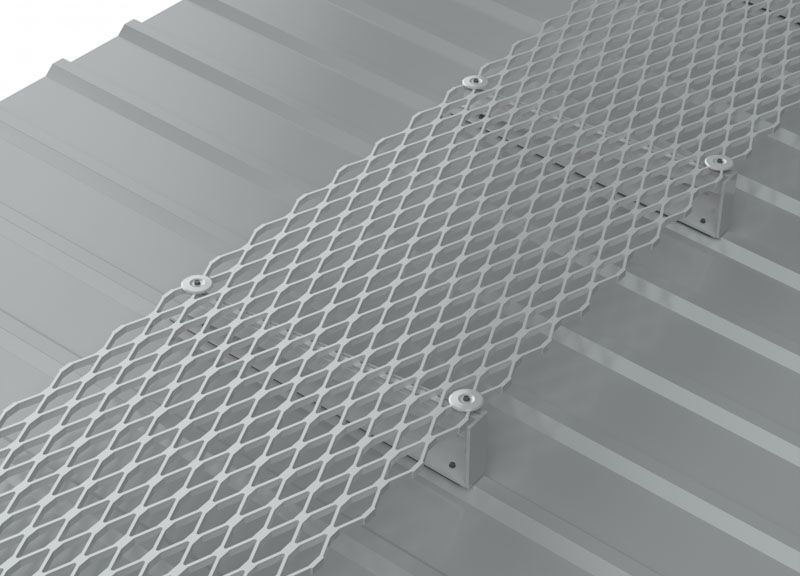
Getting Walkway Installation Right
Most roof walkway installation problems come down to four things: level, pitch, fixing, and proximity to hazards. Each one has a measurable requirement under AS 1657:2018.
Level installation
Roof walkways must be installed level across their width. The maximum cross incline is 7 degrees. Beyond that, the surface can become unstable and create a trip and fall risk under load.
Roof pitch suitability
The walkway design must suit the pitch of the roof it sits on. A system designed for a low-pitch roof will not perform correctly on a steep pitch. Pitch affects both the structural loading on the fixing points and the angle of the walking surface relative to the user.
Non-slip walkway surfaces
The walking surface must meet the slip resistance requirements of AS/NZS 4586. Aluminium open mesh grating meets this requirement for most rooftop applications and drains freely. In environments where mesh is not appropriate, the surface specification changes but the standard does not, where roof pitches exceed 10 degrees, cleat bars can be installed at 90 degrees to the direction of travel to achieve a compliant walking surface.
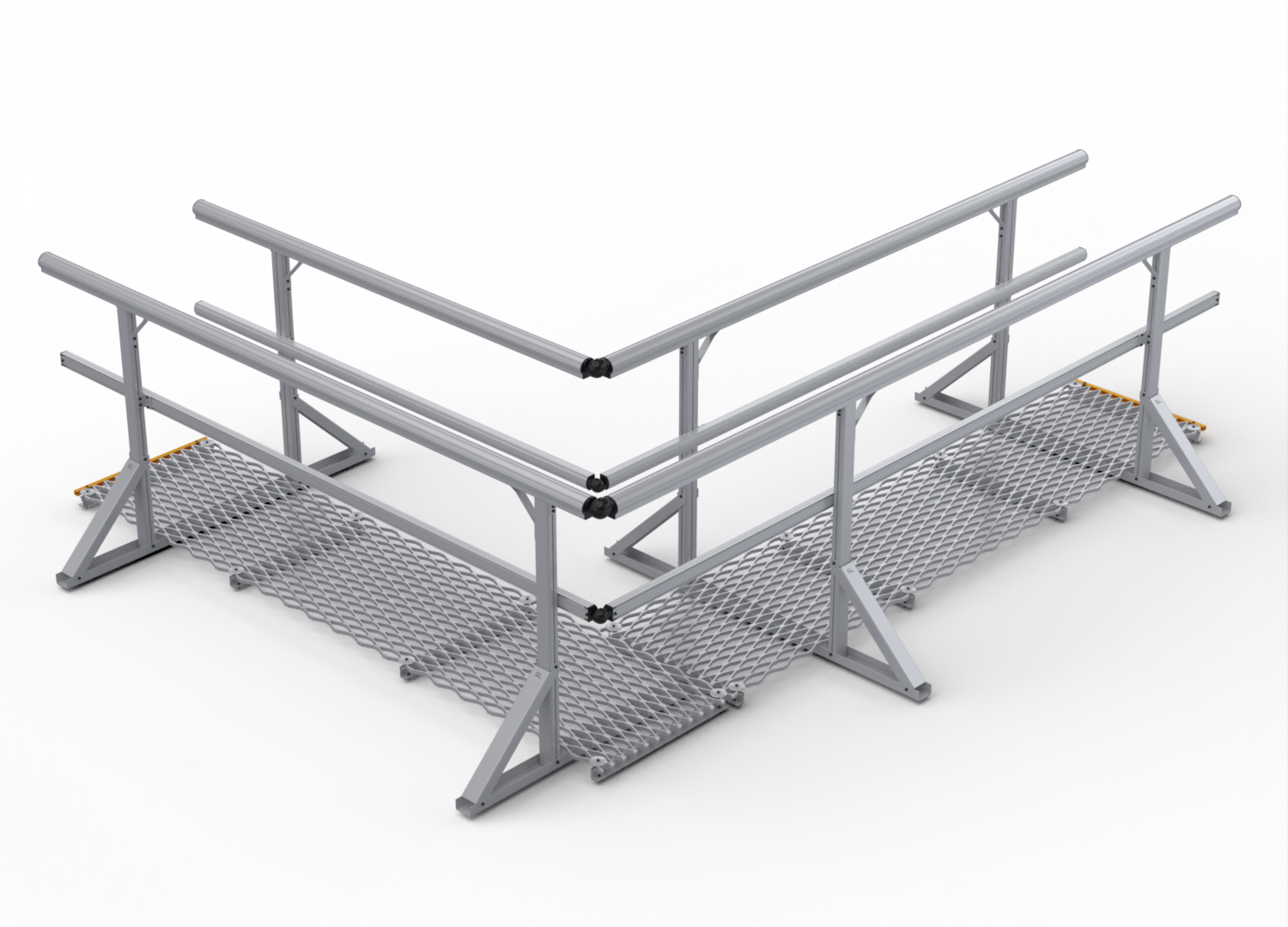
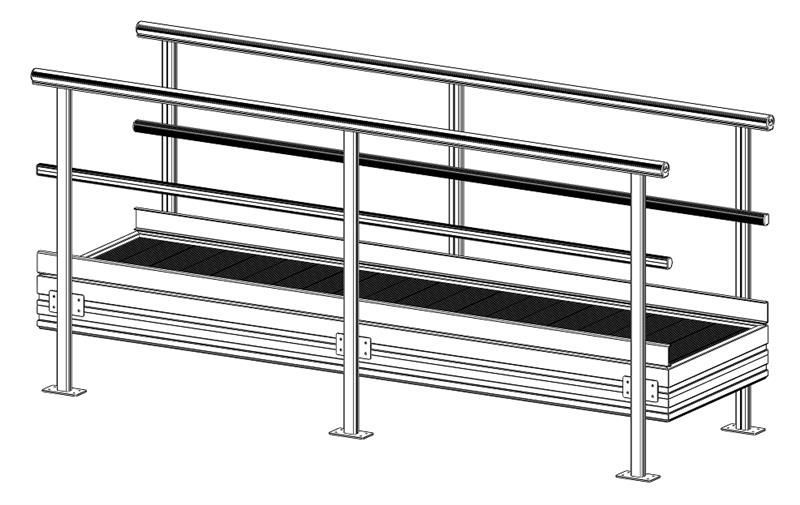
Guardrails are required when the roof slope of the area adjacent to the walkway exceeds 12 degrees and wherever the walkway runs closer than 2 meters to a roof edge or when the walkway surface is more than 300mm above the adjacent area upon which it is safe to step or stand without risk of falling.
Handrail height to be between 900mm and 1100 mm from the walking surface. Knee rails are required in all guardrail systems, and toeboards shall be installed on the edge of the walkway where there is no permanent structure within 10 mm of the edge and are required to the side of the walkway at open edges above an area below where a person could have access. Toeboards can be minimum 100mm above the floor.
Roof Edges, Skylights, and Proximity Hazards
Roof walkways must not be placed too close to unprotected roof edges or skylights. Both create fall hazards that the walkway system itself cannot address without additional controls.
Where a walkway runs parallel to or terminates near a roof edge, edge protection is required. The walkway system and the edge protection system are separate specifications. A walkway without compliant edge protection control measures does not address the risk management obligations or constitute a complete roof safety system.
Skylights present a fall-through risk, not just a fall risk. Workers on a rooftop may not identify a skylight as a fragile surface, particularly if it is the same colour as the surrounding roof. Walkways near skylights require skylight crossovers or skylight protectors to remove the fall-through hazard from the designated access path.
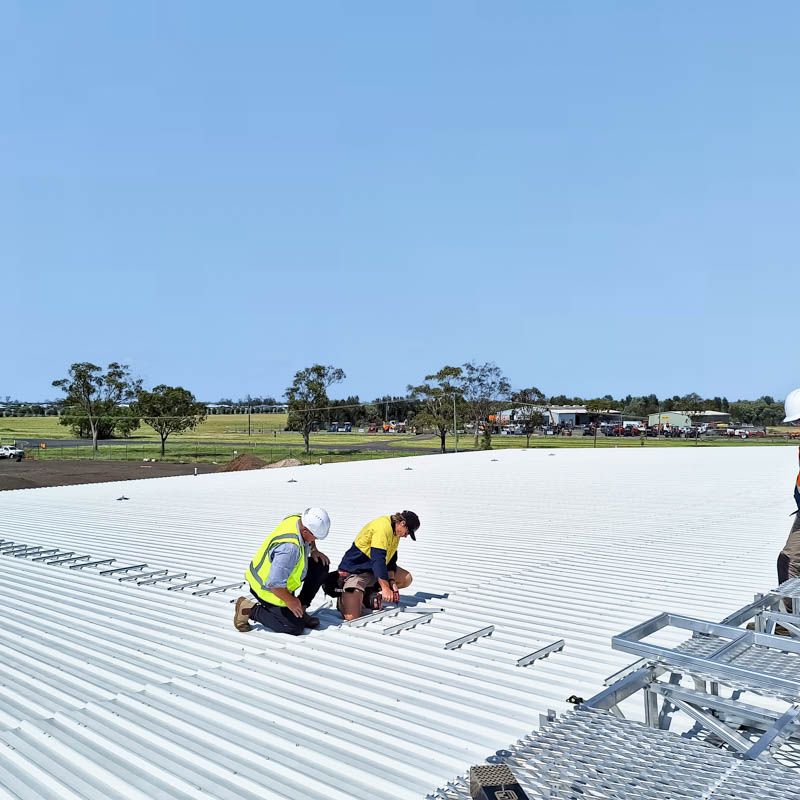
Roof Walkways Fixing, Penetrations, and Waterproofing
Roof walkway fixing is where most long-term problems originate. The fixing connects the walkway structure to the roof, and every penetration through the roof surface is a potential leak point if not detailed correctly.
Sealed roof screws
Every fixing penetration through a roof sheet must be sealed correctly. Unsealed or incorrectly sealed fixings allow water ingress, which damages the roof substrate and creates additional hazards over time. The sealing specification depends on the roof material and profile.
Penetration integrity
On some roofs, penetrations cannot be made without compromising the roof's waterproofing membrane or structural performance. In these cases, the walkway system must be designed to span between support members with fixing systems designed with complete water seal components to provide metal separation and maintain a water tight penetration without roof penetrations, or to fix to structural elements below the membrane rather than through it.
Fixing load transfer
The walkway structure transfers loads through its fixings into the roof or the building structure below. Those loads must be assessed against the capacity of the fixing substrate. On lightweight metal deck roofs, the spanning and fixing strategy is a structural engineering question, not just an installation one. In most cases, conventional roof sheeting systems will sustain live pedestrian traffic loadings.
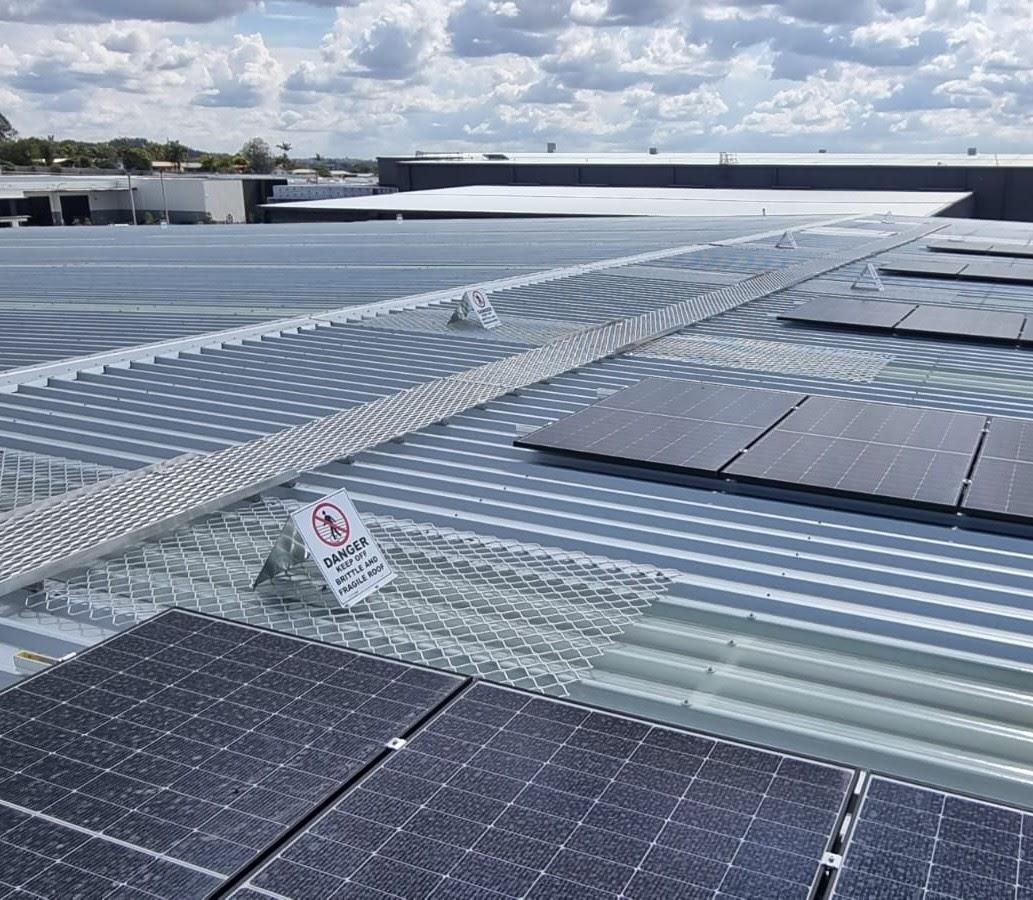
Approved Materials for Australian Roof Walkways
Aluminium is a preferred non-corrosive material specification for roof walkway structures in Australia. It forms a stable oxide layer that prevents corrosion without repainting or recoating. It is lighter than steel at equivalent load ratings, which reduces the structural demand on the roof and simplifies installation.
Grating surfaces meet the requirements of AS/NZS 4586 standard.
Aluminium open mesh is the most suitable material for this application.
FRP grating is used where non-conductive properties are required or where chemical exposure warrants a different surface material and is only suitable on a roof sheet application when it is supported by a batten system.
Material selection affects both compliance and long-term performance of a designated path of access across roof structures.
Roof walkway systems built from materials other than an aluminium system have a tendency to degrade, corrode, or damage roof sheet coatings, requiring regular treatment, creating ongoing maintenance obligations and eventual replacement costs. Aluminium systems screw-fixed to roof sheeting dramatically reduce these cycles, providing a secure holistic solution.
Choosing a Roof Walkway Installer
The installer is responsible for the following 4 requirements:
design compliance, structural engineering, installation quality, and documentation.
A system built from components that achieve the required loading capacities but are installed incorrectly is still a non-compliant system.
What to ask before appointing an installer:
Do they design to AS 1657:2018 and provide compliance documentation at project completion?
- Do they provide structural engineering certification where load classification requires it?
- Do they carry out a site assessment before quoting to understand the site-specific access requirements, or quote from dimensions only?
- Can they work within your site access constraints, including live roof environments and access methodologies?
- Do they fabricate in-house or source from third parties?
Safetylyne designs, fabricates, and installs roof walkway systems across Australia.
Every project achieves design requirements of the relevant advisory standards being AS 1657:2018 and AS /NZS 1170.0: 2002, which is documented and certified with the support of structural engineers where required.
Frequently Asked Questions
Contact Safetylyne Today to get your Roof walkway supply and installation sorted or get your roof layout design consultaion. Get your roof walkway quote or a free consultation.
View all walkways and guardrail systems products.
CONTACT US

